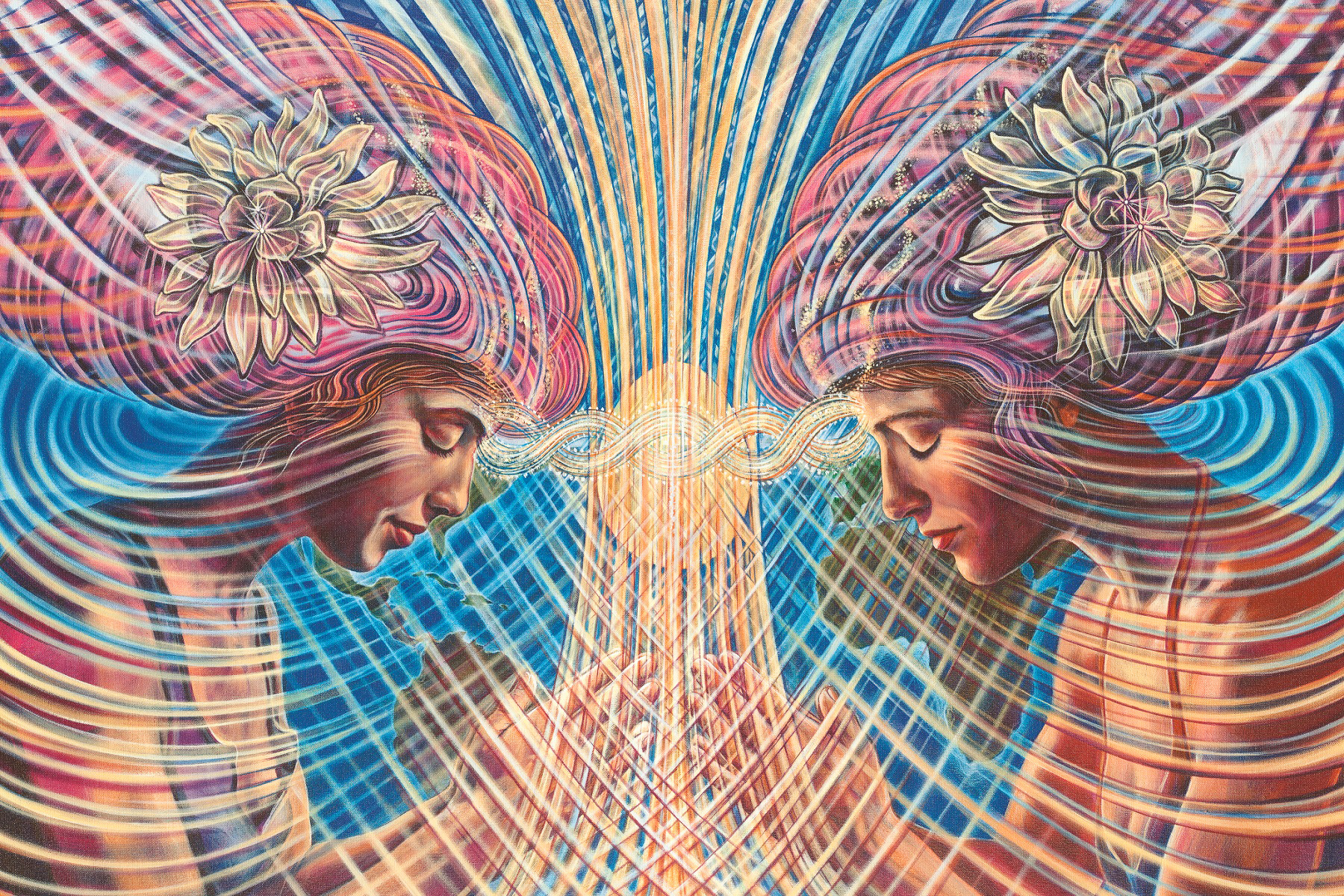
The study of Music from an Esoteric perspective is extremely difficult to understand as it presents a multitude of complexities. However, we can get a feel for the subject if we limit ourselves to principles and generalities.
The benefits of Music can be best understood, by analogy, as a therapeutic massage. Different aspects of the Music resonate with different parts of the body. When we use the term body we refer to all the bodies not just the physical; we are including the emotional and the mental bodies as well.
Music itself is highly complex and can be thought of as a multitude of interconnected, structured frequencies. They fall into 3 basic categories:
Tempo and Rhythm
This sets the general mood and operates at the lowest frequencies. A musical piece played slowly tends to add gravity and seriousness whereas a quicker tempo will generally be interpreted as uplifting and happy. The intricacies of rhythm will moderate the overall feeling and often result in a physical response (foot tapping or dancing).
Melody
Which is a sequence of fundamental notes played according to the rhythm mentioned above and tends to affect our emotions. It is not so much the notes themselves that affect us as the order in which they are played and the spacing between them.
Music is the space between the notes. It’s not the notes you play; it’s the notes you don’t play.” (Miles Davis)
We can often predict the next note(s) of a song we have never heard before. There is something innate that tells us that a piece of music sounds right; it is either melodic or discordant, it can sound flat or sharp! We don’t have to be musicians to do this.
Tone and Ambience
This involves multiples of the fundamental frequencies of the melody and again can profoundly affect us emotionally. Each instrument has its own characteristic set of harmonics that give it its own unique sound. That is how we can distinguish instruments from one another. We can also tell the difference between, say, two guitars or pianos. Every instrument and human voice has its own particular tonal quality; no two are the same.
When an instrument is played, the surroundings also play an important part to the overall sound. This occurs naturally or can be added electronically when recording. I am referring to ambience which affects the music through multiple echoes known as reverberation.
Additionally we can include Lyrics. If there are lyrics then they may have a profound effect on the listener both emotionally and mentally. This is very personal and will depend on their past experiences and the emotions and thoughts that certain words and phrases invoke within them.
We have defined above the different frequencies that we receive when listening to a piece of music. We now need to consider the listener and how they react to the music.
The Mechanism
The mechanism itself is very rarely taught properly even though it is fairly simple to understand. The reason being that science doesn’t like dealing with what can be best described as “magic”. All sound starts as a set of pressure waves. They generally travel to us via the air. On reaching our ears they cause the eardrums to vibrate in a synchronous manner. This vibration is then turned into an electrical signal (nerve impulses) which travel along the auditory nerve to our brains. This is where the “magic” happens; the brain somehow interprets the signals and produces the effect we call sound.
So in summary music is a series of vibrations but the sound is something that WE create. Trees that fall in forests only produce pressure waves – sounds are created by listeners!
To say a human being is complex is a massive understatement. We can however, talk in generalities and suggest each of our bodies is made up of a vast set of vibrational frequencies. The physical body can be considered as a whole, a collection of organs, a maze of blood vessels, bones and cells populated with a myriad of spectacular geometric structures known as molecules. Each will have its own particular resonant frequency and sets of harmonics. We are vast orchestras populated with an unimaginable number of instruments. The emotional body and mental bodies coupled with the chakra systems present further orchestras at even higher levels. We understand these vibrate at frequencies beyond the normal values associated with physical sound.
The Effects
Finally we need to understand the way that musical frequencies can connect and affect us. This is a well known to science and is termed resonance. Everything has its own natural frequency, from a tiny cell to a room. If we produce sound at this particular frequency an efficient transfer of energy occurs which stimulates the object. In extreme cases it can actually destroy the object in question by plying it with too much energy as in the case of an opera singer smashing a wine glass by sustaining the natural frequency for a number of seconds.
It is in this way that various parts of a human being are excited by music. As we are all different we all have our own particular preferences. A piece of music that is absolute loved by some people will be considered dull and boring by others. This can be seen when considering musical genres. Some people will naturally be drawn to jazz music while others prefer classical music.
The stimulation we receive from listening to music can be extremely therapeutic. It can help someone relax. It can promote physical exercise as in the case of dancing. It can help deal with emotional upset such as the loss of a loved one. It can stimulate artistic creativity. On the negative side it can rally people to fight and support a common cause. At one level a musical song can seem so simple yet its effects can be extremely profound and far reaching!
When people come together either to play music or to sing, it sends a powerful Energy which can heal both the players and the audience in many ways.
The power of a melodic voice or a beautifully played instrument can have a magical effect. Music heals the body, mind and Spirit.
432 Hz
We are told (by the Spiritual Hierarchy) that the overall natural frequency of all human beings is 432 Hz. This corresponds to the A above middle C. Modern tuning has moved away from this standard and generally uses 440 Hz. This standard was created in the 1950s but a growing number of musicians are discovering that 432Hz seems to resonate better with them. It appears harmonically richer and evokes more emotion.
To hear the difference listen to this youtube clip and decide for yourself.